
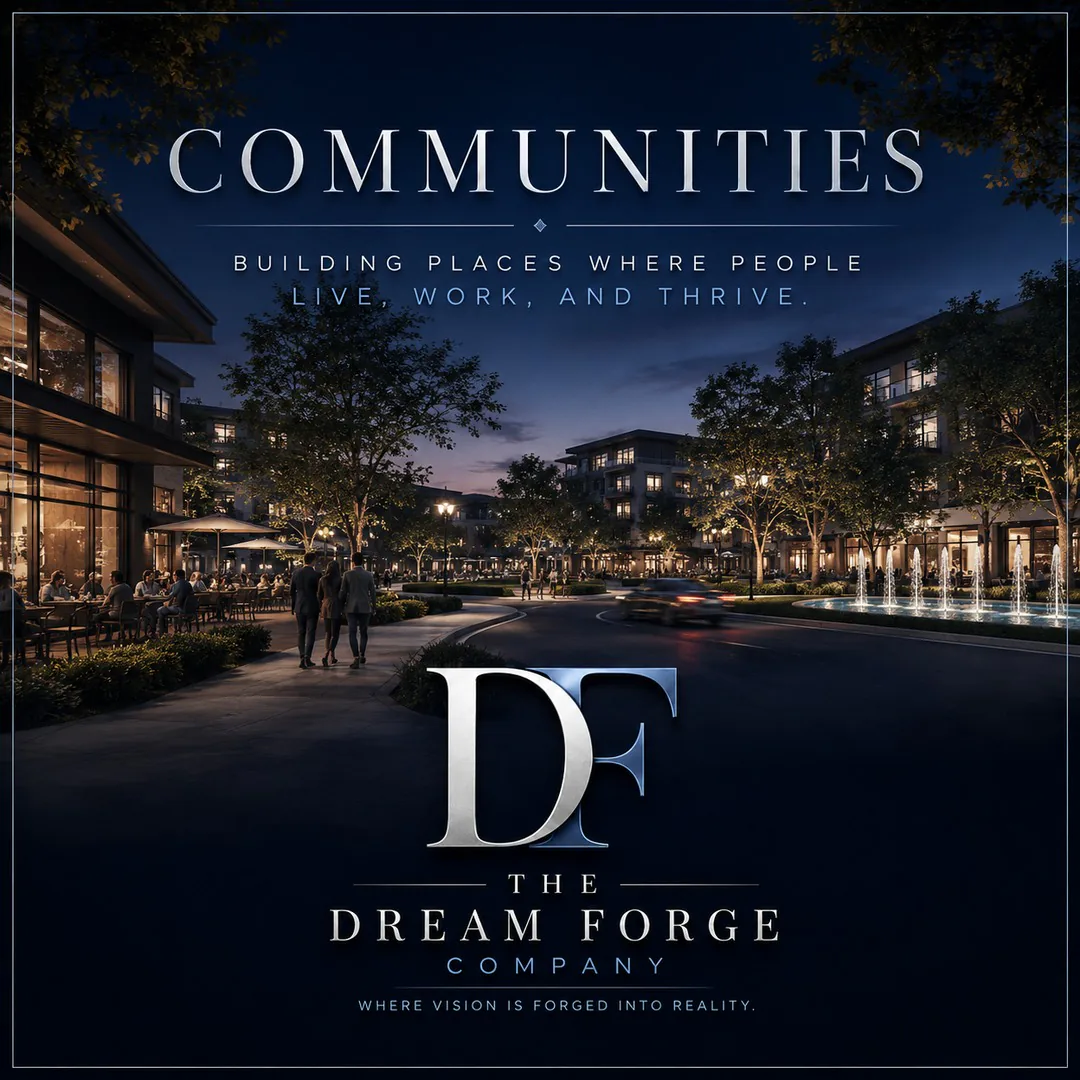
Design principles that make a place feel inevitable, not assembled.
Master-planned communities
Whole-neighborhood thinking — infrastructure, amenity, phasing, and identity coordinated from day one.
Residential neighborhoods
Housing that feels rooted — designed at the block scale, not just the lot line.
Mixed-use districts
Retail, residential, workplace, and public realm calibrated together for daily life.
Walkability
Streets and blocks sized for people, transit, and activity — not just cars.
Lifestyle amenities
Wellness, food and beverage, gathering, and third places integrated into the district fabric.
Green space
Parks, promenades, and landscape as core infrastructure — never leftover space.
Placemaking
Wayfinding, materials, and public art that make a community identifiably its own.
Community connection
Deliberate ties to schools, transit, employment, and existing neighborhood assets.
Long-term impact
Places designed to appreciate — economically, socially, and environmentally — over decades.
The best returns come from places people love.
A great community outperforms because it earns loyalty — from residents, retailers, employers, and future generations. That loyalty is not accidental; it is designed.
We plan every Dream Forge community around a simple test: would we live here? Would our operators want to open here? Would this be somewhere our children choose to return to?